
Cotton County Release Date Meanings
A projected release date is a planning estimate for a sentence already being served. It is not the event that ends custody. An actual release date is written after the responsible agency carries out a discharge, parole, or other custody movement. Cotton County court entries, the jail register, and Oklahoma Department of Corrections records can therefore show dates that refer to different steps. A bond order may authorize release, for example, while the jail discharge time shows when Cotton County custody actually ended.
Pretrial custody is different. A person held at Cotton County Jail before a case is resolved does not have a sentence-based projected release date. Bond may be posted, recognizance may be ordered, a charge may be dismissed, or another agency may keep the person held. The court can explain the legal authority, but the jail release entry identifies the physical event and destination. A transfer to ODOC, another county, federal authority, or immigration custody is not community release.
Find a Cotton County Release Date
The right route depends on custody. Cotton County Jail records control a local jail sentence or recent local booking. The Cotton County Court Clerk controls the official judgment and sentence. ODOC controls state sentence administration. The public ODOC offender lookup may help match a state record by name or ODOC number, but ODOC warns that its web details are abbreviated and may not precisely explain the sentence or time served. No confirmed public projected-date field was found.
- Classify the case. Decide whether the person is awaiting trial, serving a Cotton County jail term, or serving an ODOC sentence. A missing jail-roster name cannot answer that question.
- Read the court order. Search Cotton County in OSCN, then confirm the judgment with the Court Clerk. Note sentence length, jail credit, bond, remand, and later orders.
- Ask the record owner. For county custody, request the booking entry, release date and time, type, and destination from the sheriff. For a state sentence, use ODOC records or the person's facility case-management staff.
- Label each date. Keep parole eligibility, a tentative projection, a court release order, and an actual discharge as separate events.
- Verify the completed event. Seek the jail discharge entry or ODOC Certificate of Release and CRC termination notation after release occurs.
The broader Cotton County released-person search and records path is available on the Cotton County released inmates home page. It helps when the original custody system is not yet clear.
Oklahoma Credits Change Release Dates
Oklahoma earned credits are governed by 57 O.S. §138, while ODOC applies its detailed sentence-administration policy, OP-060211. Credit level is only one part of the record. Jail-time credit, sentence structure, achievement credits, lost-credit decisions, restoration, other cases, and statutory minimums can all affect a Cotton County release date.
ODOC policy lists standard monthly levels of zero credits at Level 1, 22 at Level 2, 33 at Level 3, and 44 at Level 4. Eligible enhanced rates are 45 at enhanced Level 3 and 60 at enhanced Level 4. Reviews occur at least every four months. Those numbers do not create a do-it-yourself release calculator. Eligibility for a level or an enhanced rate must first be established. The final month is based on days actually served and credits actually earned.
- Earned credit
- A qualified reduction applied under statute and ODOC rules, subject to eligibility and continued conduct.
- Jail-time credit
- Time the judgment or sentence record credits from custody before transfer or formal sentence service.
- Detainer
- A request or legal hold from another authority that may prevent community release when one sentence ends.
- Discharge
- The recorded end of the relevant sentence or custody component, distinct from a forecast.
Cotton Release Dates and 85%
Oklahoma's 85% restriction is tied chiefly to offenses listed in 21 O.S. §13.1 and to the date of the offense. For listed offenses committed on or after March 1, 2000, policy says at least 85% must be served before parole consideration and credits cannot reduce incarceration below that point. Current ODOC policy also notes that attempt, conspiracy, and solicitation of listed crimes enter that treatment for offenses effective November 1, 2025.
It is inaccurate to apply one percentage to every Cotton County conviction. The statute's list has changed, offense dates matter, and other laws may set separate minimums. Credits can accrue even when they cannot yet reduce the term below the statutory threshold. The judgment, the statute version that applies to the offense date, and current ODOC policy must be read together. Parole eligibility is also not the same thing as a projected release or a completed parole event.
Note: An 85% threshold limits a sentence calculation but does not supply a public Cotton County release date by itself.
Why Cotton Release Dates Move
A Cotton County release estimate can move without the prior estimate being a release order. ODOC treats projections as administrative planning tools. County jail dates can also change after the court issues a new order or staff applies lawful jail credit. Always identify the agency, date type, and case before comparing two values.
| Factor | Effect on the date | Best confirmation |
|---|---|---|
| Credit level or enhanced eligibility | Changes the rate at which eligible state credits may accrue. | ODOC sentence record and current policy |
| Misconduct, loss, or restoration | Credits may be lost or restored under the governing process. | CRC credit entries and facility records |
| Achievement credits | Eligible achievements can alter the internal computation. | ODOC credit history |
| Another case or detainer | The person may remain held or transfer when one term ends. | Movement record and receiving agency |
| Court order | A corrected sentence, revocation, or other order may change authority to hold. | Official Cotton County court record |
| Parole action | Eligibility, recommendation, grant, and actual parole remain separate stages. | PPB result plus ODOC release record |
A changed estimate is a reason to refresh the source, not proof that staff made an error. Compare the current court order, credit history, and hold information before seeking the later completed-release record.
Cotton Projected Dates Stay Confidential
The official ODOC offender-information FAQ says an inmate's exact release date is confidential unless the requester has a legitimate need, such as a judicial or law-enforcement need. ODOC also calls the date tentative. The person receives a monthly days-remaining figure and can calculate it or ask facility records or case-management staff. The person may then choose to share that information.
Different access rights must not be merged. A voluntary statement from the person, a victim-services contact, a court-authorized inquiry, an agency record request, and the public web lookup serve different roles. The absence of a future date from the public Cotton County search path is not proof that ODOC has made no internal calculation. It means the public result should not be described as a scheduled-release calendar. If consent or another lawful basis allows a future date to be shared, preserve the source and the date on which it was supplied.
The FAQ is shown in the official capture below. It corrects a common assumption that the public offender lookup must display a projected date for every state prisoner.
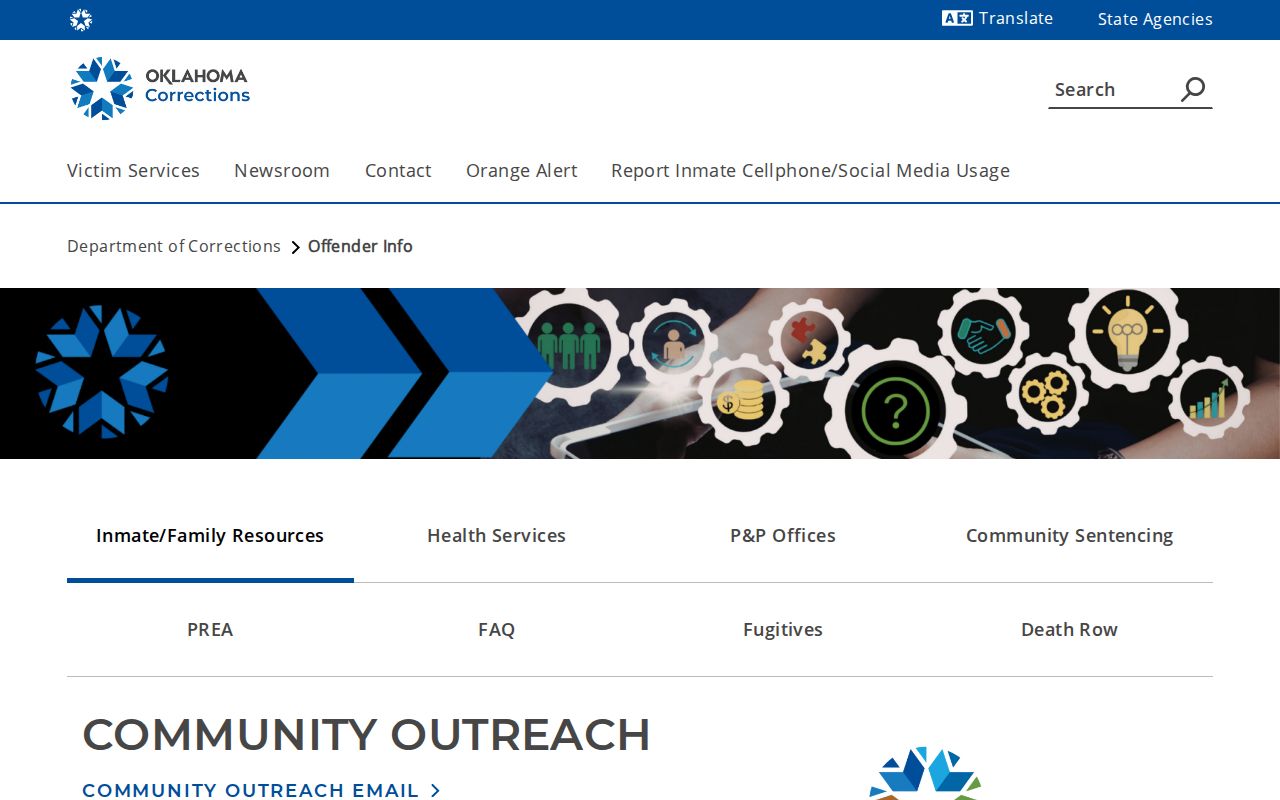
The capture supports a careful route: use the public lookup as a locator, then use an authorized channel or a voluntary disclosure for a future estimate.
Cotton Jail Release Date Rules
A county jail sentence does not automatically use ODOC's internal projection factors. Cotton County Jail follows the court commitment and its lawful local credit calculation. No Cotton-specific good-time formula, weekend advance-release rule, fixed release hour, exit point, or holiday procedure was found in the official sources reviewed. That absence should lead to a direct request, not an imported rule from another Oklahoma county.
Contact the Cotton County Sheriff's Office at 301 N. Broadway St., Walters, OK 73572, or (580) 875-2391. Ask for the sentence authority, any jail-time credit shown, the expected process, and whether another hold applies. For a completed event, request the actual release date and time, release type, and destination. A court order alone may not show the door time.
Note: No published hours were found for the Cotton County jail records contact, so call before making an in-person records visit.
How ODOC Finalizes Cotton Releases
ODOC's internal planning factors estimate time remaining at several credit levels, but policy says those projections cannot themselves effect discharge or rebill. Rebill means moving the sentence record to a consecutive case, not letting the person leave custody. Final-month work uses time actually served and credits actually earned. A projected value can therefore pass while the person remains confined because another case, detainer, lost credit, or later calculation controls.
For a past event, ODOC's Certificate of Release and Consolidated Record Card are stronger than the old estimate. The CRC records distinct entries for “discharge,” “paroled,” “death,” or “rebill,” each with its date. The Certificate is signed at release, with the original given to the person and a copy retained in the field file. Publicly releasable copies may be requested through the ODOC open-records portal.
Closed Records can also help route a completed state release request. Research identifies 405-425-2691 and osor@doc.ok.gov for general records inquiries, plus osordischarges@doc.ok.gov for discharge-only matters. Ask for the publicly releasable Certificate and the CRC portion that states the termination type and date. If the record says “paroled,” continued ODOC supervision may follow. If it says “rebill,” custody continued on another sentence record. Those labels answer more than a lone date ever could.
Confirm Cotton County Release Dates
When the expected day approaches, ask the custody agency whether the date remains tentative and whether any detainer, transfer, or court action applies. ODOC Victim Services provides a separate concern-based contact at 405-425-2607 and victim.services@doc.ok.gov. VINE can send a participating-agency custody alert, but it is not a certified discharge ledger and does not provide Oklahoma parole notification.
After the event, record the source, access time, identifier used, event label, and follow-up document. A jail discharge to ODOC is a transfer. An ODOC parole entry marks conditional release to supervision. A sentence discharge ends the relevant sentence component. The resolved VINE Inmate Check explains how to register before an expected custody change, while the jail entry or ODOC certificate remains the final verification source.
If records conflict, ask which event each date describes. A bond-posting time, court order, VINE alert, jail departure, parole entry, and sentence discharge can all be valid without matching. The sheriff owns the Cotton County custody ledger, the Court Clerk owns the official case, and ODOC owns the state sentence record. Report each answer with its agency and label instead of forcing the dates into one timeline.