
Cotton County Parole and Probation
Parole and probation can both place a person under supervision in the community, but they begin in different ways. The Oklahoma Department of Corrections probation and parole service supervises Oklahoma probationers and parolees. The Oklahoma Pardon and Parole Board conducts parole consideration. Based on the offense class, the Board may grant parole or recommend it to the Governor. A Board action is therefore not the same record as an ODOC supervision status or a completed release from prison.
A Cotton County court can also order a suspended or deferred sentence. With a suspended sentence, the court enters a conviction but suspends all or part of incarceration while conditions remain in force. A deferred sentence postpones sentencing and may later result in dismissal or expungement if all terms are met. District Attorney supervision shown in a Cotton County docket is not the same as ODOC probation. Read the Judgment and Sentence and the named supervising authority before deciding which office to contact.
| Supervision type | How it begins | Record owner | What completion means |
|---|---|---|---|
| Parole | Conditional community release from prison | PPB decision; ODOC custody and supervision records | Parole completion or later sentence discharge must be verified |
| ODOC probation | Court-ordered community sentence | Sentencing court and ODOC | Supervision ends only after lawful discharge |
| DA supervision | Terms shown in the Cotton County case | Court and District Attorney | Use the official docket and court record |
- Parole
- Conditional release from prison while part of the sentence remains under supervision.
- Probation
- A court-ordered sentence served under community rules instead of, or after, confinement.
- Discharge
- The formal end of the sentence or supervision status shown by the responsible agency record.
- Absconder
- A supervised person alleged to have stopped reporting or left supervision without permission.
Verify Cotton County Post-Release Supervision
Start with identity, sentence, and custody type. The public ODOC offender lookup can provide a lead when a person entered state custody or ODOC supervision. Search by ODOC number when known. A name search requires close comparison because people can share names. ODOC calls the web information abbreviated and not an exact account of an offense, sentence, or time served. The site has also warned about issues after a data-source change. Treat the result as a locator, then ask the office that owns the file to confirm what may be released.
- Identify the sentence. Review the Cotton County court case for a prison sentence, suspended term, deferred term, or named supervision agency.
- Search the ODOC history. Match the ODOC number, name, and sentence details. Note the displayed status and the time of the search.
- Separate a decision from supervision. A PPB docket result explains a parole decision. It does not prove the prison exit date or current office assignment.
- Confirm the assigned office. Cotton County is listed under Frederick, but residence and placement can affect an individual assignment.
- Request the source record. Ask for the public portion of the Certificate of Release, CRC termination notation, Judgment and Sentence, or supervision record that answers the exact question.
A completed Cotton County release and supervision status may span several records. The parole date in an ODOC Consolidated Record Card, called the CRC, addresses the state custody event. The Certificate of Release records a formal release step. A PPB result covers the Board's action. The Frederick office addresses the supervision assignment. For the full county jail and state discharge trail, use the Cotton County released inmate search and records path without treating a live roster as proof of a past release.
Note: A historical ODOC status can remain searchable after release, but the public screen is not a certified discharge record.
Frederick Office for Cotton Supervision
Cotton County has a cross-county supervision route. The official ODOC directory lists the Frederick probation and parole office as serving both Cotton and Tillman counties. Its entry places the office at the County Jail in Frederick. No published office hours appeared in the reviewed source, so call before travel and ask whether the named person is assigned there. Staff may limit what can be released, and a public directory entry does not establish that every Cotton County case reports at one fixed site.
Frederick Probation and Parole Office
County Jail
Frederick, OK 73542
(580) 335-3762
Serves Tillman and Cotton counties
Hours: not published in the reviewed directory
The official ODOC office directory shows the supervision route and should be rechecked before a visit. The captured directory page below provides the source context for the Frederick listing.
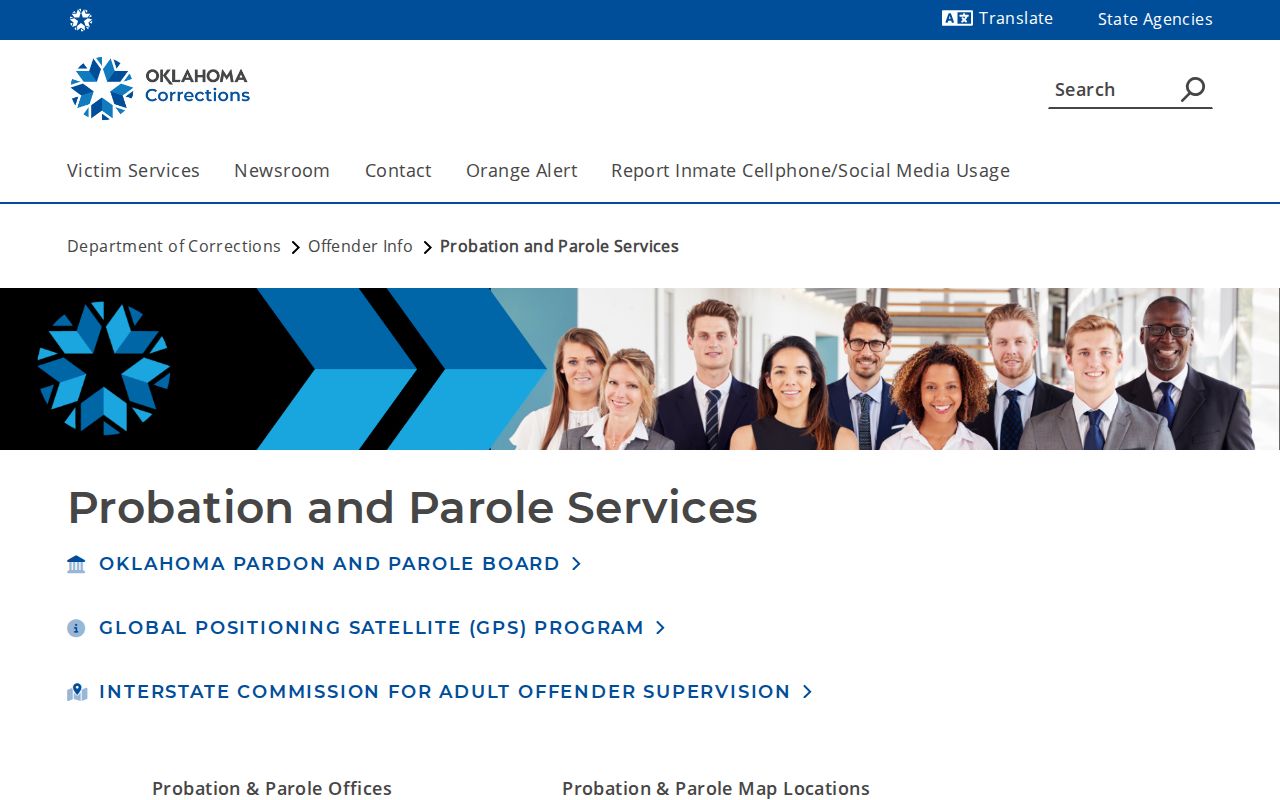
The neighboring location is a routing fact, not proof of a specific assignment. Confirm the office with ODOC and use the court record when the sentence names a different form of supervision.
Cotton County Absconder Warrant Checks
An absconder or warrant listing means supervision may have been interrupted. It does not show normal completion. The ODOC fugitive search is the specific public path identified for that issue. Match identity with care, read the displayed agency language narrowly, and do not approach a listed person. Call law enforcement when there is an urgent safety concern. For a record question, the ODOC Fugitive Warrants Division is the agency contact.
Important: A fugitive result concerns an alleged supervision or warrant problem. It is not a new sentence, a discharge record, or proof that a person is at a stated place.
ODOC lists the Fugitive Warrants Division at 405-425-2570 or 405-425-2571, with toll-free access at 866-363-1119 and email at warrants@doc.ok.gov. Ask which public record confirms the status and whether another office owns the current case. A no-result is not proof that no warrant exists, because the public interface may have coverage, timing, or identity limits.
The official fugitive-search screen can be reviewed at its ODOC source before entering a name. The successful manifest capture below documents the correct Cotton County supervision lookup path.
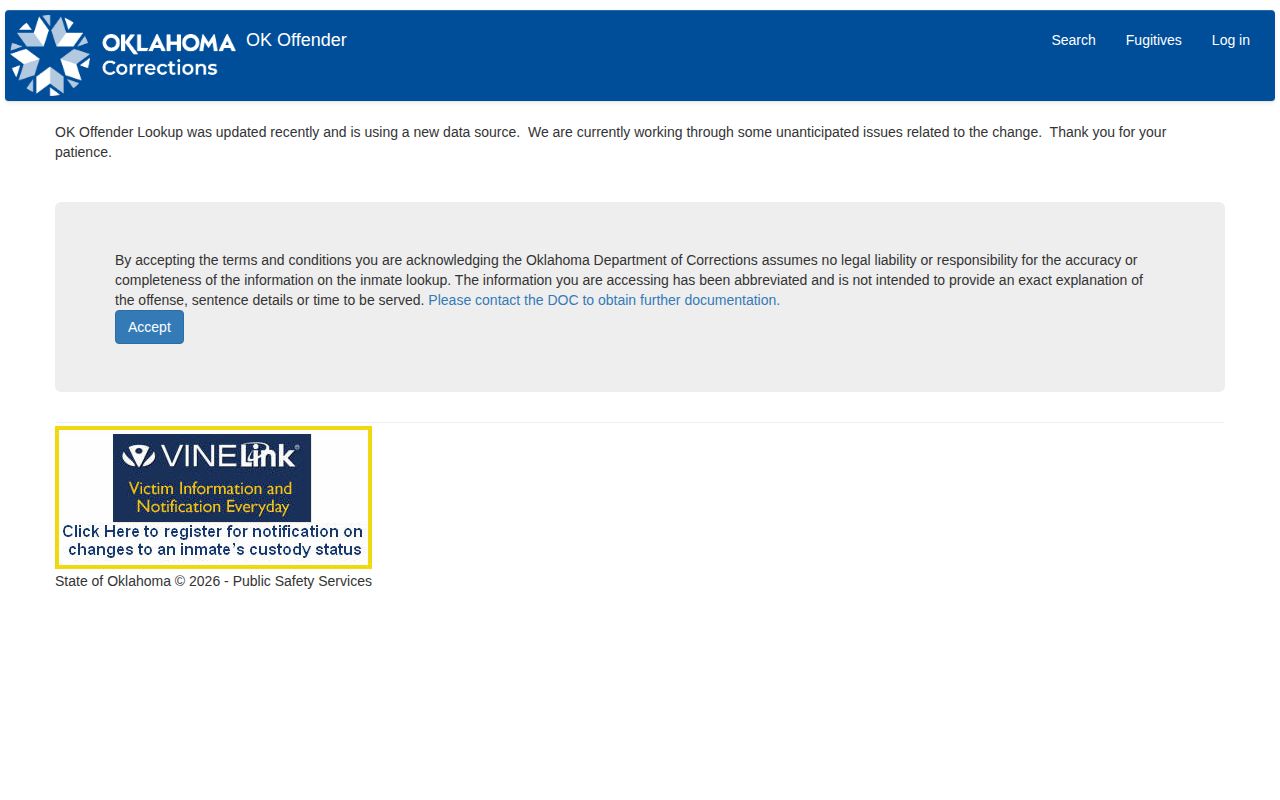
The screenshot identifies the official system to use. Any result still needs an identity match and agency follow-up before it is described as a current Cotton County supervision fact.
Cotton County Supervision Conditions
Conditions come from the Judgment and Sentence, parole documents, and the assigned supervision record. They can include reporting, travel limits, payment terms, treatment, testing, or other case-specific duties. The research does not establish one standard set for every Cotton County person. Read the actual order. A violation allegation may lead to added review, a warrant, revocation proceedings, or another response, but it does not by itself prove that supervision was revoked.
Revocation means a court or authorized body has taken formal action based on an alleged breach. Remand means a person is sent back into custody under an order. Neither term should be inferred from a missed appointment or a web entry alone. Search the Cotton County court chronology for filed action, then obtain the official order from the clerk. For parole matters, PPB records explain Board proceedings while ODOC records show custody and supervision administration.
Note: Court, PPB, and ODOC records answer different parts of a violation case, so preserve each agency's exact date and label.
Ending Cotton County Post-Release Supervision
Release from a jail or prison does not necessarily end a sentence. Parole continues conditionally in the community. Probation continues under the court's terms. A suspended portion can begin after state custody ends, and ODOC policy says a discharge to a suspended portion routes the file to the proper probation and parole region. That is why the word “discharge” must be read with the Judgment and Sentence rather than treated as a universal end to every duty.
For a completed state event, ask ODOC Closed Records for the publicly releasable Certificate of Release and CRC portions that state “paroled” or “discharge” with the date. The CRC uses other labels for death and “rebill.” Rebill starts a new card for a consecutive case and is not community release. The released person receives the original Certificate under ODOC policy, while a copy remains in the field file. With consent, that personal copy can be compared to the agency record.
Supervision completion should be confirmed by the office or court that owns it. Request the discharge order or termination entry instead of relying on a roster absence, old web status, or parole decision. Where access is limited, ask the custodian which public portion can be supplied. Oklahoma law and agency policy can restrict some supervision information, so a narrow request is more useful than a demand for an entire file.
Where Cotton County Supervision Occurs
Cotton County adult community supervision routes to Frederick in neighboring Tillman County. This is the distinctive local answer to a common location mistake. The Walters courthouse, Cotton County Jail, Frederick office, and an individual's actual reporting site can all be different places. The listed Frederick office serves the county, but a person's residence, placement, and sentence can affect the active assignment.
Confirm the office before travel. Give the person's full name and ODOC number when lawful and available, then ask whether the Frederick office is the correct public contact. If a Cotton County docket names District Attorney supervision, start with the court and the District Attorney rather than assuming ODOC owns the record. When a person moved after release, ask ODOC which office now holds the case without publishing private schedule details.
Source check: The Frederick directory entry establishes county service coverage. It does not reveal a person's reporting day, private plan, or present location.