
Cotton Released-Inmate Mugshot Meaning
A Cotton County booking photograph records appearance at an earlier booking or agency event. It does not establish guilt, a conviction, present custody, supervision, or current legal status. That limit matters most after release. An old image may remain visible long after Cotton County custody ended, while a new registry image may come from a later and different record. The image and the release must each have their own source.
Oklahoma's public jail-register rule, 51 O.S. §24A.8, makes several kept booking and discharge facts available, including the prisoner's description and date or manner of discharge. The mandatory list does not expressly name the booking photograph. A requester may ask for a kept photo, but disclosure cannot be promised. If no image is released, the Cotton County release entry still stands on its own and should not be replaced with a same-name picture.
The kept record may distinguish the committing authority, reason for commitment, booking details, custody movement, and manner of discharge. Those fields supply context that the image lacks. “Bond” is not dismissal. “Time served” addresses the confinement term but may coexist with another obligation. “Transfer” requires a destination before anyone concludes the person entered the community. A sound Cotton County mugshot search therefore starts with the exact booking event and ends with the exact custody outcome.
Where Cotton Release Mugshots Appear
No verified official Cotton County roster, recent-release photo feed, past-inmate archive, or dedicated sheriff app was found in the official channels reviewed. The available routes differ by who created the image. The sheriff may keep a local booking photo. ODOC may hold a state corrections image. A registry photograph has a distinct public-safety purpose and covers only qualifying registrants. Selected official posts or news reports are leads, not complete archives.
| Channel | Photo status | How to access and interpret it |
|---|---|---|
| Cotton County sheriff roster or release feed | None verified online | Use a focused records request instead of assuming a missing public page means no record exists. |
| Sheriff social posts | Selected images only | Check agency attribution and post date. A post is not a full released-person list. |
| Sheriff records request | May be kept | Ask for the specific booking photo and the matching release or transfer entry. |
| ODOC offender record | May include state image | Use only for a person who entered state custody; label it as an ODOC image. |
| Sex and violent offender registry | Profile image may appear | Qualifying registrants only. It is not a general Cotton County release archive. |
| News or other republished image | Event-specific | Trace the caption to an agency and date, then confirm release with an official record. |
A commercial archive may surface in a broad search, but it is only an unverified lead. Do not treat its caption, date, status, or removal pitch as agency proof. Return to the sheriff, court, or ODOC record that owns the event.
Request a Cotton Booking Photo
A narrow request gives Cotton County staff enough detail to find the correct booking without asking for a new compilation. The official sheriff directory lists Cotton County Sheriff's Office at 301 N. Broadway St., Walters, OK 73572, and (580) 875-2391. No Cotton-specific electronic form, request email, published fee schedule, promised response time, or retention term was found. Ask for a fee estimate and available format before the office incurs cost.
- Match the event. Provide full name, approximate booking date, arresting agency, and a booking or case number if known.
- Name the image. Request the specific booking photograph kept with that Cotton County booking, if publicly releasable.
- Request release facts too. Ask for the booking sheet, custody-status history, release date and time, release type, and destination or receiving agency.
- Separate the agencies. For a Walters Police arrest held at the county jail, seek the arrest record from police and booking or discharge material from the detention agency.
- Handle a partial response. If the photo is withheld, ask for segregable public release fields and the legal basis for withholding the image.
Oklahoma law does not require an agency to create a record it does not keep. A photo-only response also does not answer whether Cotton County released or transferred the person. The Cotton County release-record search explains how to reconcile the jail entry with the court and state systems.
Verify Cotton Release Photo Provenance
Every image needs four labels: the agency, record type, event date, and access date. A caption such as “Cotton County booking photograph associated with the listed booking date” is accurate when the record supports it. “Current inmate” is not accurate after a verified release. When a news report or repost lacks those labels, use its agency credit to seek the source record rather than copying the caption.
Match identity with a booking number, case number, ODOC number, approximate date, and other lawful public identifiers. Same-name errors are easy. Then match the release in a separate record. Bond, recognizance, time served, dismissal, transfer to ODOC, and transfer to another agency are distinct outcomes. A court docket can explain legal authority, but the Cotton County jail register supplies the custody exit time.
Note: A registry profile photograph may be newer than the jail image and must be labeled as a registry image, not a booking mugshot.
Cotton Sheriff Photos, Not App
The Cotton County Sheriff's Facebook channel is the identifiable local digital source found in the audit. It carries selected public-safety, recognition, recruiting, and warning posts. It is not a systematic booking-photo or released-person archive. No verified Cotton County sheriff mobile jail app was found, so readers should not be directed to download an unnamed app or expect an app-only image feature.
The captured sheriff channel below illustrates the limited social route. Its presence proves an official communication channel exists, not that every Cotton County booking or release appears there.
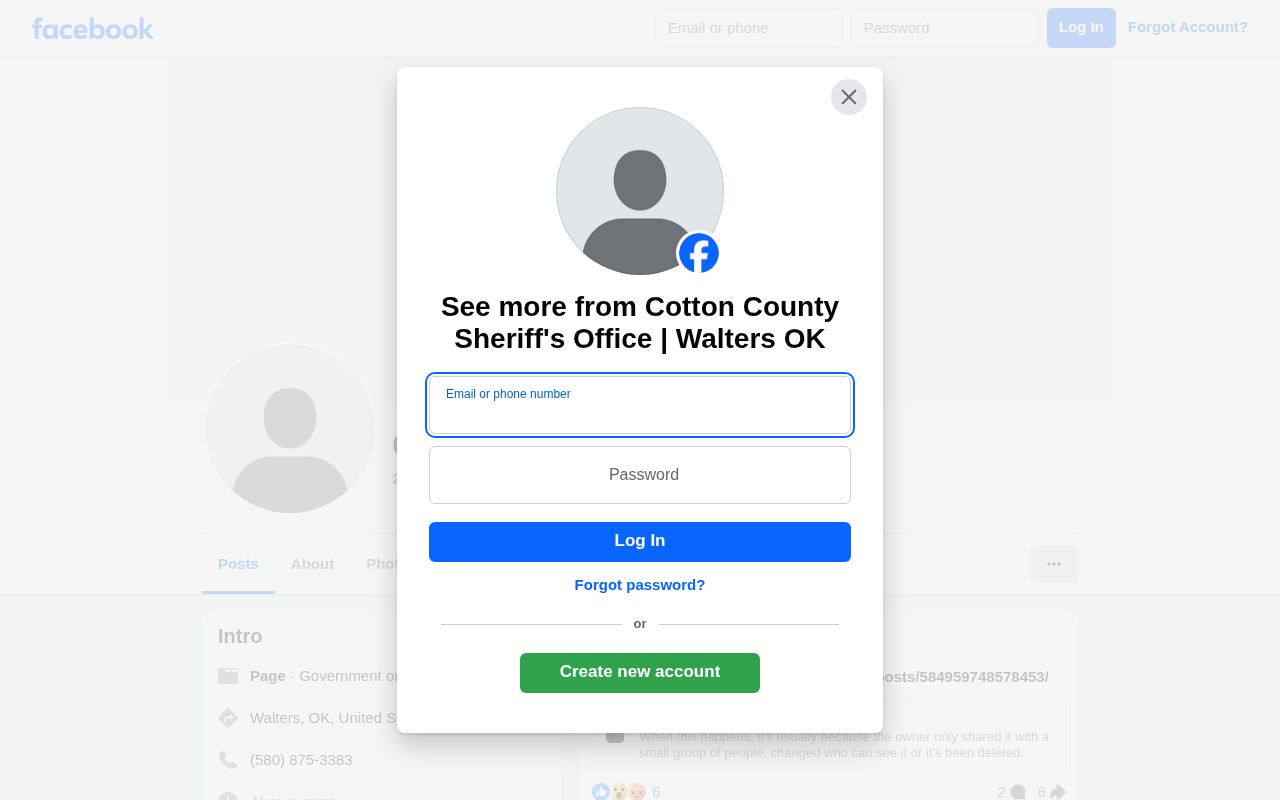
A useful post should be logged with its date, wording, and credited agency, then checked against the jail discharge record. The resolved Cotton County 24-Hour Releases path also relies on records requests because no official recent-release feed exists.
Cotton Release Photos in ODOC
When a person moved from Cotton County Jail into state custody, the relevant image may be an ODOC photograph rather than the local booking image. ODOC's Consolidated Record Card includes a photograph along with sentence, movement, detainer, credit, and release-affecting entries. Possession in the CRC does not guarantee public disclosure. Request any releasable copy through the ODOC open-records portal and label the source correctly.
The Oklahoma sex and violent offender registry gateway can display profile images for people with a qualifying registration duty. That narrow system is not a list of all released Cotton County inmates. Absence from it may simply mean no registry duty applies. A profile image can also postdate the booking image and should never be used to infer the older jail photo's date.
The official registry gateway capture shows the scope of that limited state channel.
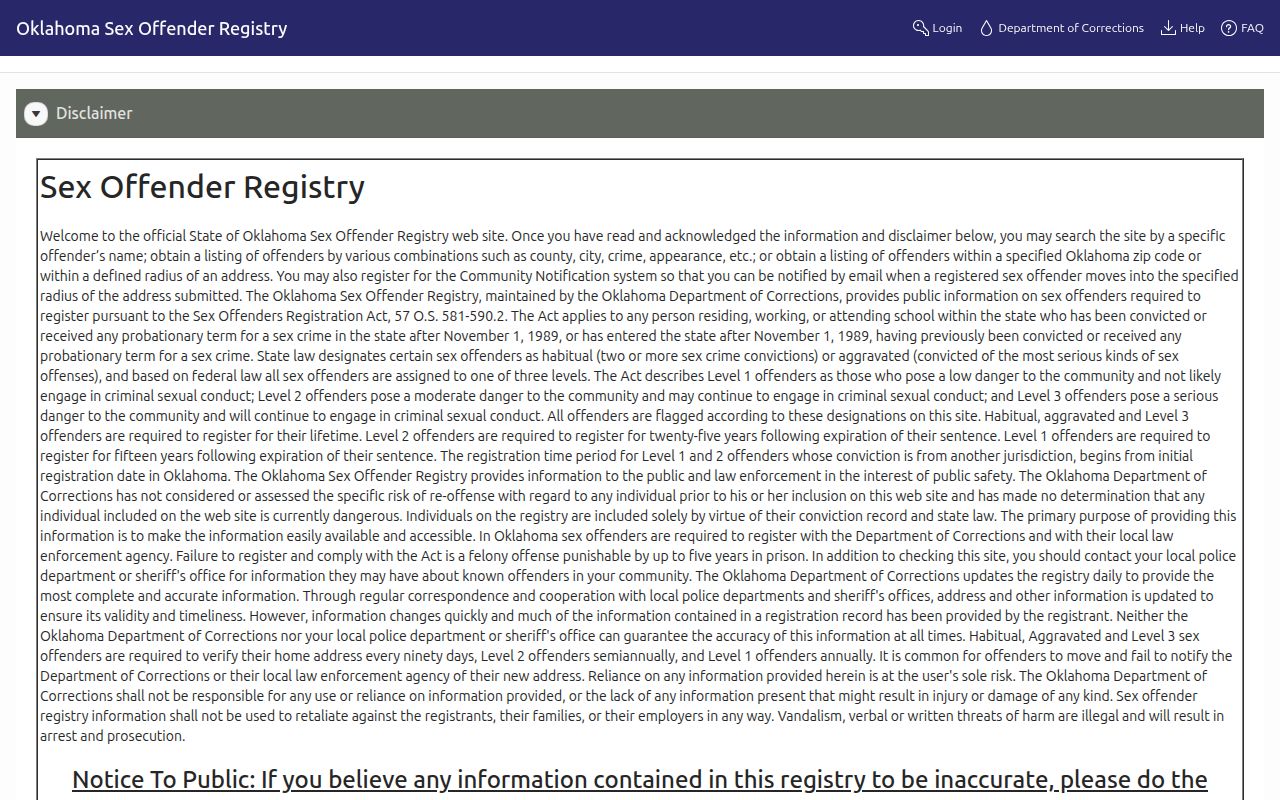
The registry must remain a separate record type. Its image and status do not provide the Cotton County jail release timestamp.
Cotton Release Mugshots in News
Walters Herald, KSWO, and official agency releases may carry a photo tied to a selected arrest or public-safety event. Such publication is selective. It does not establish a full Cotton County booking log, and a publication date may differ from the booking date. Read the caption for the named agency, locate the original release if possible, and retain the date on which the image was accessed.
Republished images require extra care. A news photo might be a booking image, a registry profile, a court exhibit, or a general file image. Do not relabel it without proof. An image that remains online after a jail roster changes does not contradict the sheriff's dated discharge. Likewise, a deleted story does not establish sealing or confirm that the underlying government record vanished.
When two captions conflict, prefer the office that created the image and the agency that owns the custody event. Write down the precise caption rather than broadening it. Keep the publication date apart from the arrest, booking, court-order, and discharge dates. A source that cannot identify the photographed person or original agency should not be used to fill a missing Cotton County image. The right result may be a verified release record with no public photograph.
Cotton Mugshots After Expungement
Oklahoma distinguishes a full 22 O.S. §18 sealing order from a §991(c) deferred-disposition update. OSBI explains that full §18 relief can seal the arrest and court record. A qualifying §991(c) result changes the disposition to “pled not guilty, case dismissed” but does not erase the arrest record. A missing Cotton County case or photo can therefore reflect lawful sealing, while a changed case label may reflect a different form of relief.
Never work around a sealing order through cached copies, mirrors, or old reposts. Send a certified order to the agencies and publishers that control their copies, following each lawful process. OSBI separates free filing of the court order from its $150 arrest-record processing fee, and local agencies may have fees. Research found no verified Oklahoma-specific anti-pay-to-remove statute in the official sources reviewed, so no private removal service should be presented as a legal remedy.
A corrected or sealed government source does not ensure that every copied image vanishes at once. Start with the court order and the record-owning agency. Identify the exact Cotton County event, attach only the proof requested by the recipient, and keep a log of the response. If an official source continues to show a record that should be restricted, ask that source about its correction process. Do not treat a private demand for payment as proof that the image or caption is accurate.